Astronaut Pray Graphics: Print Templates for Soulful Branding
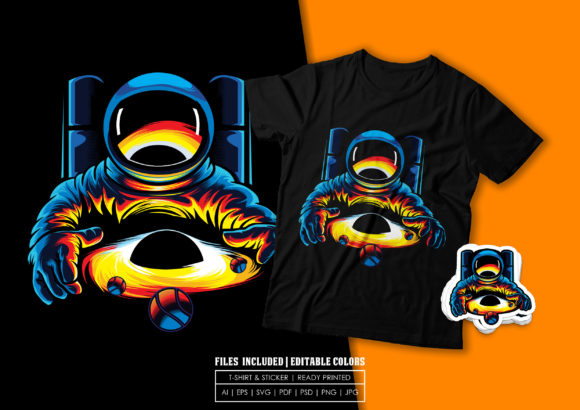
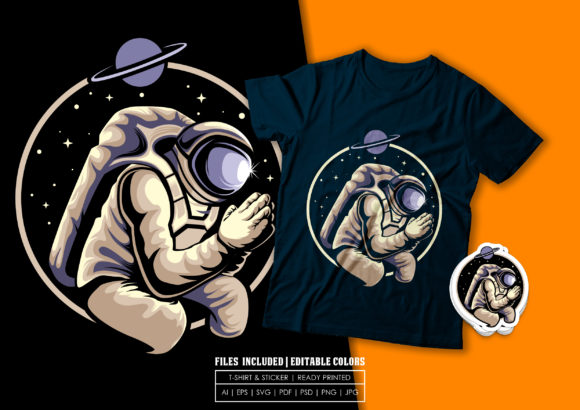
As a graphic designer who’s built brand identities for handmade businesses, seasonal Etsy shops, and local event campaigns, I opened T-shirt Design - Astronaut Pray expecting whimsy—but what landed was quiet reverence. It’s not a cartoonish space hero or a sci-fi mascot. It’s a contemplative figure in a softly detailed suit, hands folded, helmet reflecting stars—not as spectacle, but as stillness. The pose reads like devotion, not discovery. That subtle emotional weight makes it unusually versatile for real client work where authenticity matters more than trend-chasing.
First Impressions: Mood Over Motif
The design balances delicate linework with intentional negative space—no overcrowded details, no aggressive gradients. It feels hand-drawn yet precise, spiritual but grounded. That duality means it lands well for clients in wellness, faith-based small businesses, mindfulness studios, indie book launches, or even eco-conscious apparel lines. It doesn’t scream “fun” or “edgy”—it invites pause. For a boutique candle brand launching a “Cosmic Calm” collection, this isn’t just a t-shirt design; it’s a visual anchor for mood boards, Instagram story highlights, and packaging accents.
Where It Shines in Real Client Projects
T-shirt Design - Astronaut Pray excels where emotional resonance supports brand storytelling. On product mockups—especially dark heather tees or matte black totes—it gains depth and dignity. As a sublimation design for mugs or ceramic tiles, its vector clarity holds up at any scale. In editorial design for a small-press zine on modern spirituality, it works beautifully as a chapter divider or cover accent. As a sticker design for a Cricut project, the clean 100-vector construction ensures crisp cuts—even on intricate helmet curves.
- Print-on-demand sellers: It scales flawlessly from pocket-sized chest prints to full-back poster layouts without pixelation.
- Canva template creators: Its SVG and EPS 10 compatibility lets you embed it into editable templates while preserving color swatches and layer names.
- Packaging design: Use it subtly—rotated 15° as a watermark on kraft gift tags or repeated as a border on thank-you cards.
- Social media graphics: Paired with a soft sans serif (think Poppins Light or Montserrat Thin), it creates calm, scroll-stopping contrast against busy feeds.
- Printable wall art: Its balanced composition and generous breathing room make it ideal for 8×10 or 16×20 framed prints sold on Etsy.
Where Caution Is Warranted
This isn’t a one-size-fits-all graphic design asset. Avoid using T-shirt Design - Astronaut Pray in minimalist corporate branding—it lacks the austerity of Swiss design or the sharp neutrality needed for law firms or fintech. Don’t force it into dense flyer layouts with tight text blocks; its contemplative energy gets lost. On low-contrast backgrounds (e.g., light gray over off-white), test readability early—the fine helmet lines can soften. And skip it entirely for projects demanding strict gender neutrality or literal realism; its gentle stylization leans poetic, not documentary.
Design Judgment: Hierarchy, Trust & Consistency
What makes T-shirt Design - Astronaut Pray effective in commercial design is how it supports—not competes with—brand voice. It doesn’t dominate hierarchy; it deepens it. When placed beside a strong headline or logo, it adds emotional texture without stealing focus. That builds visual trust: audiences sense intentionality, not clipart recycling. For a small business owner launching their first product line, that perceived care translates directly to perceived value. But consistency hinges on smart pairing—match its warmth with muted palettes (dusty blues, charcoal grays, warm taupes), not neon gradients or hyper-saturated primaries.
Practical Designer Notes Before Client Use
Before dropping T-shirt Design - Astronaut Pray into a live project, run these checks:
- Test in grayscale: Confirm legibility and tonal balance without color—essential for embroidery or single-color screen printing.
- Preview on both light and dark backgrounds: Especially check helmet reflection detail on black—it should remain visible, not vanish.
- Scale it down to 1.5 inches wide: Does the folded-hands gesture stay readable? If not, simplify or reserve it for larger applications only.
- Drop it onto realistic mockups: A flat PNG preview lies; a draped tee or textured tote reveals how the lines interact with fabric grain.
- Verify file integrity: Open the AI and EPS files—confirm all 100 vector shapes are ungrouped and editable (no embedded raster). Test SVG export in browsers to catch rendering quirks.
- Font compatibility test: Try it beside serif (Cormorant Garamond), sans serif (Inter), script (Dancing Script), and display fonts (Bebas Neue)—note which pairings enhance vs. clash with its tone.
- Confirm commercial license scope: Ensure redistribution rights cover your client’s use case—especially for print-on-demand platforms or digital product bundles.
Final Verdict: A Thoughtful Creative Asset, Not Just Another Clipart
T-shirt Design - Astronaut Pray isn’t flashy—but that’s its strength. In an ecosystem flooded with generic space-themed clipart, it offers narrative cohesion and quiet sophistication. It works because it respects the viewer’s intelligence and the client’s brand integrity. Whether you’re designing for a meditation app’s launch campaign, curating a creative marketplace bundle, or building visual assets for a handmade business, this graphic design asset earns its place by doing more than decorating—it connects. Just remember: its power lies in restraint. Use it with purpose, test it rigorously, and let its stillness speak for your client’s story.