Coffee and Cats T-Shirt Design
A Designer’s First Look: Charm Without Clutter
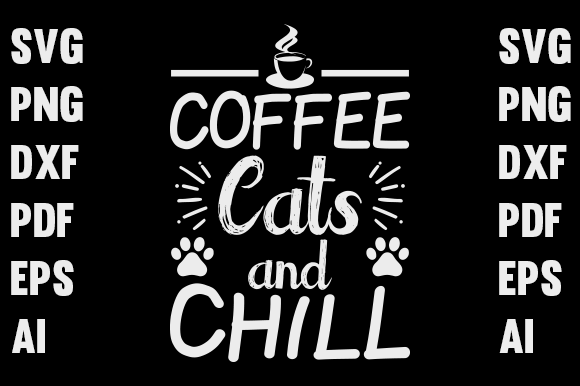
When I opened T-shirt Design- Coffee and Cats, my first thought wasn’t “cute”—it was “usable.” As someone who’s stitched hundreds of designs onto everything from baby onesies to boutique aprons, I’ve learned that charm without clarity is a liability. This design lands right in the sweet spot: a relaxed, hand-drawn vibe with clean outlines, balanced negative space, and just enough detail to feel intentional—not overworked. The coffee cup sits comfortably beside a curled cat silhouette, neither competing nor crowding. No tiny whiskers or micro-paws to vanish in satin stitch. No overlapping elements that’ll bleed on thin fabric. It breathes—and that’s rare in print templates meant for embroidery adaptation.
Real Project Test: A Custom Embroidered Tote for a Local Café Pop-Up
Last week, I used T-shirt Design- Coffee and Cats as the centerpiece for a set of linen-cotton tote bags—part of a small-batch collab with a neighborhood café. We wanted something warm, approachable, and instantly recognizable at a glance. I digitized it myself (keeping stitch count moderate) and ran it on mid-weight stabilizer. On the finished totes? It held up beautifully: the cat’s curve read clearly, the steam from the cup translated well in running stitch, and the overall shape scaled cleanly from 3.5” to 5”. Customers didn’t just smile—they paused. That pause matters. It means the design earns attention without shouting, which is gold for handmade product storytelling.
Where It Shines—and Where You’ll Want to Pause
T-shirt Design- Coffee and Cats works especially well for:
- Custom apparel: Think crewneck sweatshirts, relaxed-fit tees, and lightweight jackets—fabrics with gentle drape and minimal stretch.
- Embroidered patch production: Its compact footprint and open layout make it ideal for iron-on or sew-on patches on denim jackets or backpacks.
- Baby embroidery and nursery decor: Soft curves and no sharp angles suit onesies, burp cloths, and pillow covers—especially when stitched in matte cotton thread.
- Holiday and gift embroidery: It reads as cozy, not kitschy—perfect for teacher gifts, hostess totes, or “just because” embroidered tea towels.
- Etsy listings and small shop merchandise: As a digital embroidery file, it pairs cleanly with printable mockups. Buyers appreciate its versatility across shirts, mugs, and decals—even if they’re adapting it for machine embroidery later.
But let’s be real: it’s not magic. Use caution on:
- Curved surfaces like caps: The horizontal orientation and slight width mean it’ll need careful hooping and possibly minor repositioning—or better yet, a vertical variant (not included).
- Ultra-thin or highly textured fabrics: Skip it on slubbed linen or delicate rayon unless you add cutaway + tear-away stabilizer combo.
- Dark fabric without contrast testing: That subtle steam line? It disappears on navy or charcoal without a bright thread choice—always test in black-and-white mockups first.
- Products needing heavy laundering: While the design itself isn’t dense, avoid tight fill-stitch areas near the cup handle unless you confirm stitch density aligns with your machine’s tension settings.
Design Assets That Support, Not Sabotage, Your Craft Business
What makes T-shirt Design- Coffee and Cats stand out among Graphics and Print Templates isn’t just its theme—it’s how thoughtfully it’s built for translation. The SVG and AI files gave me clean vector paths for redigitizing. The PNG transparent made quick work of mockup overlays. And having EPS and PDF on hand helped when a client needed a version for their in-house screen printer. As an Etsy seller and embroidery designer, I value formats that don’t force me into extra cleanup time—and this delivers.
That said: always check licensing before selling finished items or reselling digital files. The listing says “Perfect for use on Shirts, Mugs, Bags…” but doesn’t specify commercial redistribution rights. If you’re building a craft business around this design, verify those terms directly with the creator.
Practical Notes Every Embroidery Designer Should Run Through
Before stitching T-shirt Design- Coffee and Cats into your next project, ask yourself:
- Did I test it on scrap fabric? Especially important if using textured or stretchy material.
- Do my thread colors enhance—not mute—the mood? Cream on oatmeal linen? Yes. Pale yellow on beige? Maybe not.
- Is my hoop size appropriate? This design fits comfortably in a 4x4 hoop—but double-check the actual dimensions in your software.
- Are small details legible at my intended size? Zoom in on the cat’s ear and cup rim. If edges blur or stitch gaps widen, simplify or adjust density.
- Does it hold up in grayscale? Critical for dark garments and preview thumbnails on Etsy or Instagram.
- Did I choose stabilizer based on fabric—not habit? Lightweight cutaway for knits, tear-away for stable wovens, fusible for linens.
- Does it serve both personal and commercial goals? For me, it does: it’s warm enough for a handmade gift, polished enough for a boutique shelf, and flexible enough for a craft fair table.
Final Thought: It’s Not Just a Design—It’s a Conversation Starter
In my decade of reviewing embroidery files, I’ve learned that the most successful ones don’t just look good—they invite connection. T-shirt Design- Coffee and Cats does that quietly. It’s not trying to be clever or trendy. It’s confident in its simplicity, generous with its breathing room, and respectful of the maker’s time and tools. Whether you’re stitching it onto a holiday pillow cover for a friend or scaling it for a small shop’s summer collection, it carries warmth without weight. And in today’s handmade market? That kind of grounded, joyful practicality is exactly what customers—and designers—keep coming back for.