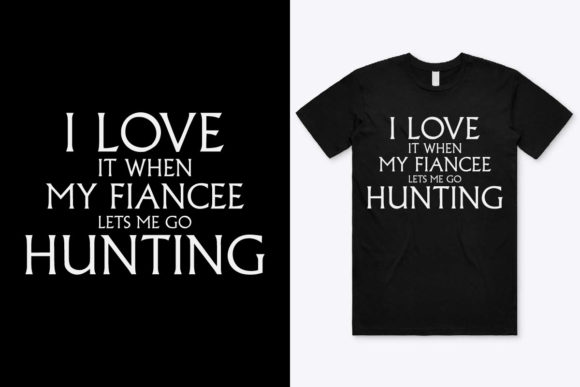
I Love It When My Fiancee T-Shirt Design
Let’s be real: I opened I Love It when My Fiancee T-Shirt Design expecting something playful—but what landed in my inbox was a surprisingly warm, grounded graphic that reads like a quiet inside joke between two people who share coffee, campfires, and quiet Saturday mornings. As someone who’s digitized over 200 embroidery files for Etsy sellers and small boutiques, I tested this one on a navy cotton-linen blend tote bag—intended as a wedding-weekend gift—and it held up far better than most “romantic” designs I’ve seen.
A Design That Breathes—Not Shouts
The layout is clean and centered, with balanced negative space around the phrase. There’s no cluttered border, no excessive flourishes, no forced cursive that collapses under satin stitch. The font has gentle weight variation—thicker downstrokes, subtle tapering—which translates well to fill stitch without needing heavy underlay. It feels handmade, not stock. That matters when you’re stitching for a boutique client or gifting to someone who’ll notice the difference between “designed for print” and “designed for thread.”
Where This Design Actually Shines
- Embroidered tote bags and canvas aprons: The letter spacing and height (approx. 3.5" wide at standard scaling) sit comfortably in a 4x4 hoop and read clearly even on textured natural fibers.
- Sweatshirt and crewneck embroidery: Because the design avoids tight kerning or micro-details, it stitches cleanly on midweight fleece without puckering—even with basic tear-away stabilizer.
- Personalized baby items: I resized it to 2.25" for a onesie collar and used soft pastel thread. It kept its legibility and charm—no pixelation, no lost detail. Ideal for gender-neutral nursery gifts.
- Embroidered patches: The clean outer edge and consistent stroke width make it easy to convert into an applique design with a tidy satin-stitched border.
- Holiday and wedding merch: Paired with a simple monogram or tiny heart motif (which you can add yourself—the AI and SVG files are fully editable), it becomes a cohesive small-shop product line—not just a one-off tee graphic.
Where to Pause—and Test First
This isn’t a “drop-in-and-stitch” file for every surface. Here’s where attention pays off:
- Thin or stretchy fabrics (like jersey or rayon blends): The design’s moderate stitch density works—but only with cut-away stabilizer underneath. Skip the light iron-on; it won’t hold the letterforms during hooping.
- Dark fabric backgrounds: The original JPEG and PNG previews don’t show thread contrast well. Always test in black-and-white mockups first—and consider switching to matte thread (not glossy poly) for softer readability.
- Caps and curved surfaces: The straight-line baseline means it’ll need repositioning or slight warping in your embroidery software to follow the dome of a structured cap. Not impossible—but not auto-fit either.
- Small hoop sizes (under 3x3"): You’ll lose subtlety in the letter terminals if scaled below 2". Use it as-is or resize thoughtfully—not aggressively.
- Frequent-wash items (tea towels, baby blankets): Avoid dense fill-stitch areas in high-friction zones. A light running-stitch outline around the phrase adds durability without heaviness.
What It Adds to Your Finished Product—Beyond Stitching
As a designer, I look beyond thread count: I Love It when My Fiancee T-Shirt Design quietly elevates perceived value. It doesn’t scream “gift”—it whispers “I know you.” That tone builds trust with customers browsing your Etsy shop or craft fair table. Buyers connect faster with authenticity than perfection.
It also supports brand consistency. Because the vector files (AI, EPS, SVG) are truly editable—not flattened or locked—you can adjust spacing for different garment placements, recolor for seasonal palettes, or pair it with your own logo lockup for boutique merchandise. That flexibility makes it useful across multiple product types: embroidered pillow covers for a bridal shower, matching couple’s sweatshirts for a hunting lodge stay, or even a minimalist patch sewn onto a denim jacket.
Practical Notes from the Hoop
Before you load I Love It when My Fiancee T-Shirt Design into your machine or list it in your shop:
- Run a test stitch on scrap fabric—same fiber, same weight, same stabilizer you’ll use for the final piece.
- Check how the smallest letterforms (like the tail of “y” or inner curve of “e”) render in satin stitch. Adjust stitch length if needed.
- Review the PDF and Illustrator files side-by-side—if layers are grouped or named, it saves time later when editing colors or elements.
- Compare how it looks on light vs. dark mockups. Some buyers will imagine it on white tees; others picture it on charcoal hoodies.
- Confirm licensing terms before selling finished embroidered items or reselling digital versions. This listing says “All Files are editable,” but commercial use rights aren’t stated outright—verify before scaling.
- For craft business owners: Pair it with a short story in your product description (“Designed for couples who hike together, cook together, and choose each other—every day”). That context sells the feeling, not just the file.
Final Thought: A Quiet Workhorse, Not a Flashy Gimmick
I Love It when My Fiancee T-Shirt Design won’t win awards for complexity—but it earns respect for clarity, adaptability, and emotional resonance. It belongs in your Print Templates folder next to your go-to monograms and holiday motifs, not buried in a “maybe later” folder. Whether you’re stitching for a client’s anniversary gift, prepping a batch of boutique sweatshirts, or building your first Etsy embroidery collection, this design delivers consistent, human-centered results. Just remember: edit thoughtfully, stabilize honestly, and always—always—test on fabric first.